





Compare
Products
Products
EZ Health® Oracle® talking glucose meter features a revolutionary speaking function that allows users to hear as well as see their glucose results. At the recent Canadian Diabetes Association meeting in Montreal, doctors, nurses, diabetes educators, and people living with diabetes responded enthusiastically to this innovative device.
The Oracle® meter really is for everyone with diabetes. Theresa Stagliano, a medical secretary who uses the Oracle® meter, says:, “I like my Oracle® because it is so simple to use.” Seven year old Jaclyn from Toronto was recently diagnosed with Type 1 diabetes. Jaclyn said, “I love my Oracle® meter because it’s so much easier to use than the other meters they showed me at the hospital.”
"I like my Oracle® because it is so simple to use."— Theresa Stagliano, Medical Secretary
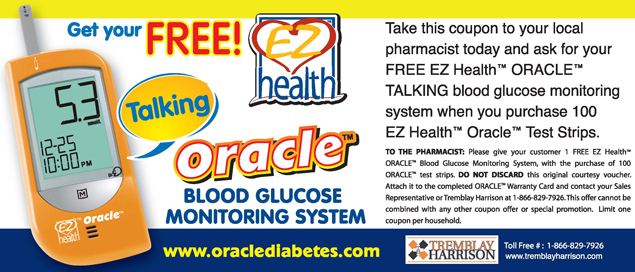
Your EZ Health® Oracle® Talking Blood Glucose Monitor is now available FREE at your local pharmacy with the purchase of 100 test strips.

Seven-year-old Jaclyn from Toronto was recently diagnosed with Type 1 diabetes. She shared: “I love my Oracle® meter because it’s so much easier to use than the other meters they showed me at the hospital.”
Monitor your health with total confidence. The EZ Health® Oracle® system combines fast, accurate technology with a design focused on your comfort and ease of use.
Diabetes is a chronic condition that affects how the body turns food into energy. Normally, the body breaks down most food into sugar (glucose) and releases it into the bloodstream. When blood sugar rises, your pancreas releases insulin—a hormone that helps glucose enter cells for energy.
When you have diabetes, your body either doesn’t make enough insulin or can’t use the insulin it produces effectively. Over time, this can lead to serious health complications, including heart disease, vascular problems, kidney damage, nerve problems, and vision loss.
In type 1 diabetes your body stops producing insulin because the immune system attacks the insulin-producing cells of the pancreas. It often develops in childhood or adolescence but can happen at any age.
In Type 2 diabetes your body continues to produce insulin but it’s not enough. Often, the body's cells become resistant to the effects of insulin. Lifestyle changes such as exercise, weight loss, and a healthy diet can help control type 2 diabetes.
Develops during pregnancy and usually resolves after birth. People with gestational diabetes are more likely to develop type 2 diabetes later in life.
Several factors can increase the likelihood of developing Type 2 diabetes:
Some people have no symptoms — regular testing is key.
If you experience these symptoms, consult a healthcare professional for evaluation.
Diabetes can be effectively managed. Early diagnosis and treatment reduce the risk of complications. Treatment is tailored to your type and lifestyle.
Type 1 diabetes typically requires lifelong insulin therapy alongside careful monitoring of diet and activity levels. Type 2 diabetes is often managed with lifestyle changes and medication. Some people may eventually require insulin therapy.
Even with treatment, regular monitoring of blood sugar and ongoing medical care are essential to prevent complications and maintain overall health.
Monitoring blood glucose levels is essential for effectively managing diabetes and preventing serious complications. Regular testing helps ensure your blood sugar stays within a safe range, reducing the risk of both high and low blood sugar. By tracking consistently, you and your healthcare professional can make informed decisions about diet, medication, and lifestyle.
How often you test your blood glucose depends on the type of diabetes you have and your treatment plan. Many people check before meals, two hours after eating, before bedtime, or whenever they feel unwell. Your healthcare professional can recommend the best schedule to help you stay on track and adjust as needed.
Before meals — baseline glucose reading
Two hours after eating — post-meal response
Before bedtime — overnight safety check
Whenever you feel unwell — as needed
Testing with Oracle® is quick and simple — results in seconds.
Clean your hands thoroughly and dry them
Insert a test strip into your Oracle® meter
Use your lancing device on the side of your fingertip
Place a small drop of blood on the test strip
Your meter displays and speaks your result.
A "target range" is usually set by your healthcare team and can vary for each person. Readings that are too high (hyperglycemia) or too low (hypoglycemia) may indicate changes are needed.
Normal (fasting): 4.0–7.0 mmol/L — within healthy range for most people with diabetes
Too high (hyperglycemia): Review diet, medication, or activity with your care team
Too low (hypoglycemia): Act immediately — consume fast-acting glucose and contact your healthcare professional
For reliable results, always wash and dry your hands before testing. Store your meter and supplies at room temperature and follow the manufacturer’s instructions carefully. If your readings seem unusual, repeat the test to ensure accuracy.
Recording your results helps you see how food, exercise, medication, and stress affect your blood sugar. Over time, you and your healthcare team can identify trends and make informed adjustments to improve control and prevent complications.
Managing diabetes isn’t just about testing — it’s about balance. Eating a nutritious diet, staying active, maintaining a healthy weight, and getting enough rest all play a part. Regular checkups and open communication with your healthcare team can help you live well and confidently with diabetes.
Diabetes affects millions of Canadians. Understanding the facts empowers you to take control of your health and make informed decisions every day.
Need assistance? Call our care line:
1-866-829-7926
Diabetes is diagnosed when high levels of sugar (glucose) are found in your blood.
You are not alone. Millions of Canadians live with diabetes.
There are 3 types of diabetes. In Type 1 diabetes, a person stops producing insulin. In Type 2 diabetes, a person still produces insulin but does not produce enough insulin to keep blood glucose levels in a normal range. Gestational diabetes develops in pregnancy and usually goes away when a pregnancy ends.
When diagnosed, many people with diabetes do not have symptoms. Those who do may experience thirst, frequent urination, dizziness, blurred vision, weight loss, infections, or poor wound healing.
Diabetes treatment is designed to reduce symptoms and long-term complications. Optimal control of your blood glucose leads to a significant reduction in long-term complications.
Your diabetes care is focused on you. Diabetes is best managed with the help of an integrated healthcare team.
You can help manage your diabetes by making healthy lifestyle choices.
Education, physical activity, a healthy diet and self-monitoring of blood glucose are key components of your treatment.
Your healthcare team will work with you to decide how often you should check your blood glucose.
Smoking significantly increases your risk of cardiovascular disease. It is best if people with diabetes do not smoke.
Often diabetes management includes medications. Take medication as prescribed.
To ensure early detection and treatment, you should have annual eye exams.
Your cholesterol and blood pressure should be carefully monitored.
Foot ulcers are a major complication and should be managed by your healthcare team.
Contact our Diabetes Care Line or find your nearest pharmacy offering the FREE monitor coupon with 100 test strips.
🔥
| Size | Bust | Waist | Low Hip |
|---|---|---|---|
| XS | 32 | 24-25 | 33-34 |
| S | 34-35 | 26-27 | 35-36 |
| M | 36-37 | 28-29 | 38-40 |
| L | 38-39 | 30-31 | 42-44 |
| XL | 40-41 | 32-33 | 45-47 |
| 2XL | 42-43 | 34-35 | 48-50 |


